
8
7
6
5
4
3
2
1a
b
c
d
 e
f
g
h
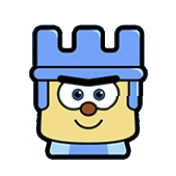
The rook looks like the tower of a castle and starts in the corners of the board. After the queen, it is the strongest piece, worth about five points.
How the rook moves
- In straight lines, any number of squares: forwards, backwards, left or right.
- It cannot jump over other pieces. It stops in front of one of its own pieces, or captures an enemy piece that stands in its way.
- It never moves diagonally.
The rook also takes part in a special move with the king, called castling, the only move in chess where two pieces move at once.
Using the rooks well
- Rooks love open lines. A file (column) with no pawns on it is the perfect road for a rook.
- Connect your rooks. Once the knights, bishops and queen have left the back row, the two rooks protect each other.
- The seventh row is a target. A rook that reaches the opponent's second row often attacks several pawns at once.
- Rooks are great at checkmate. Two rooks, or a rook and a king, can force checkmate together. The most famous pattern is the back-rank mate.
For parents
Rooks are usually the easiest piece for young children after the pawn, because straight lines are easy to see. A good mini-game: one rook against three or four pawns. The rook tries to capture them all before a pawn reaches the end of the board.