
 e
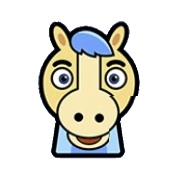
The knight is the piece shaped like a horse, and it moves like no other piece: in an "L". It is also the only piece that can jump over others, which makes it the favourite of many children and the trickiest piece to learn.
How the knight moves
The knight moves two squares in a straight line, then one square to the side, making the shape of a capital L. It can go in any direction, so from the middle of the board it has eight possible squares.
- It jumps. Pieces in between, yours or your opponent's, do not stop it.
- It captures where it lands. Only the piece on the landing square is taken; the pieces it jumps over are safe.
- It always changes colour. A knight on a light square always lands on a dark one, and the other way round. This is a great way to check a move.
Why knights are powerful
Because it jumps, a knight is perfect for surprise attacks. Its favourite trick is the fork: landing on one square that attacks two enemy pieces at once.
A knight in the middle of the board controls eight squares, but a knight in a corner controls only two. That is where the old saying comes from: "A knight on the rim is dim."
For parents
Children find the knight hardest, so teach it last. Two ideas help: count out loud ("one, two, turn"), and play the knight's tour game: put the knight on one square and a coin on another, and see how many moves it takes to reach the coin. The knight is worth about three points, the same as a bishop.